
Alto Douro Wine Region: Discovering the UNESCO Heritage from the River
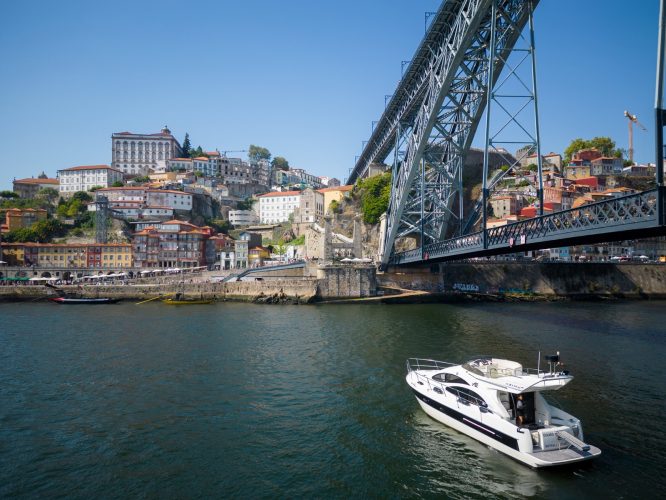
Some landscapes only make sense once you are inside them. The Alto Douro wine region is one of them: miles of terraces carved by hand into schist slopes, vineyards tumbling down to the water and a river winding between mountains. It has been a UNESCO World Heritage Site since 2001, and the best way to discover it is from the river itself. Here is why.
In short
- The Alto Douro wine region has been a UNESCO World Heritage Site since 2001, classified as a living, evolving cultural landscape.
- It is one of the oldest demarcated wine regions in the world, with terraces shaped over centuries.
- Seen from the river, the landscape of vineyards and mountains reveals its full scale, impossible to grasp from the road.
- A private cruise lets you choose the pace, the stops and the best light for photographs.
What makes the Alto Douro wine region World Heritage?
In 2001, UNESCO inscribed the Alto Douro on the World Heritage list as a living, evolving cultural landscape. In other words: it is not a monument frozen in time, but a region where people still work the land today, just as they did generations ago. The recognition honours the unique way humans transformed a harsh territory, steep schist slopes, scorching summers, hard winters into one of the most beautiful agricultural landscapes on the planet.
Three reasons weighed on the classification:
- A millennia-old tradition. Wine has been made on these slopes for around two thousand years, and the landscape you see today is the result of that continuous work.
- A pioneering demarcated region. The Douro was officially demarcated in 1756, making it one of the oldest regulated wine regions in the world.
- A rare harmony between people and nature. The terraces, the estates, the schist walls and the vines form a coherent whole, recognisable at a glance.
The terraced landscape: centuries of carving the mountain
The element that defines the Alto Douro is its terraces, the ledges that climb the slopes like giant steps. They were built stone by stone, over centuries, to allow vines to grow on gradients where otherwise nothing would hold. The soil is mostly schist, a rock that splits into sheets, heats up in the sun and returns that warmth to the vines, part of the secret of Douro wines.
Over time, different ways of arranging the vines on the slope emerged, each with its own visual signature:
| Vineyard type | How to spot it | What it reveals |
|---|---|---|
| Traditional terraces (socalcos) | Schist walls, narrow and irregular ledges | The oldest technique, built by hand generation after generation |
| Ramped terraces (patamares) | Wider terraces, no wall, with an earth bank | A more recent adaptation to mechanised work |
| Vertical planting (vinha ao alto) | Rows of vines climbing straight up the slope | Making the most of the gradient |
From the river, this mosaic takes on a dimension no photograph does justice to: layer upon layer of green rising to the ridge, dotted with the white houses of the estates.
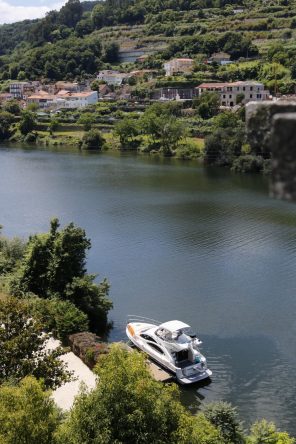
Why discover the Alto Douro from the river?
For centuries, the river was the Douro’s only road. It was down its waters that the rabelo boats carried the wine barrels to Porto. Seeing it by boat is, therefore, the most authentic and the most beautiful way to get to know it.
- The right scale. Only from the middle of the water do you grasp the true height of the slopes and how the vines cover them top to bottom.
- No crowds, no traffic. Aboard, the landscape drifts by slowly and quietly, with no packed viewpoints or winding roads.
- Angles impossible from land. The best views of the terraces open precisely towards the river, which is where they were meant to be seen from.
- The Douro light. In early morning and late afternoon, the low sun draws out every terrace and turns the water golden.
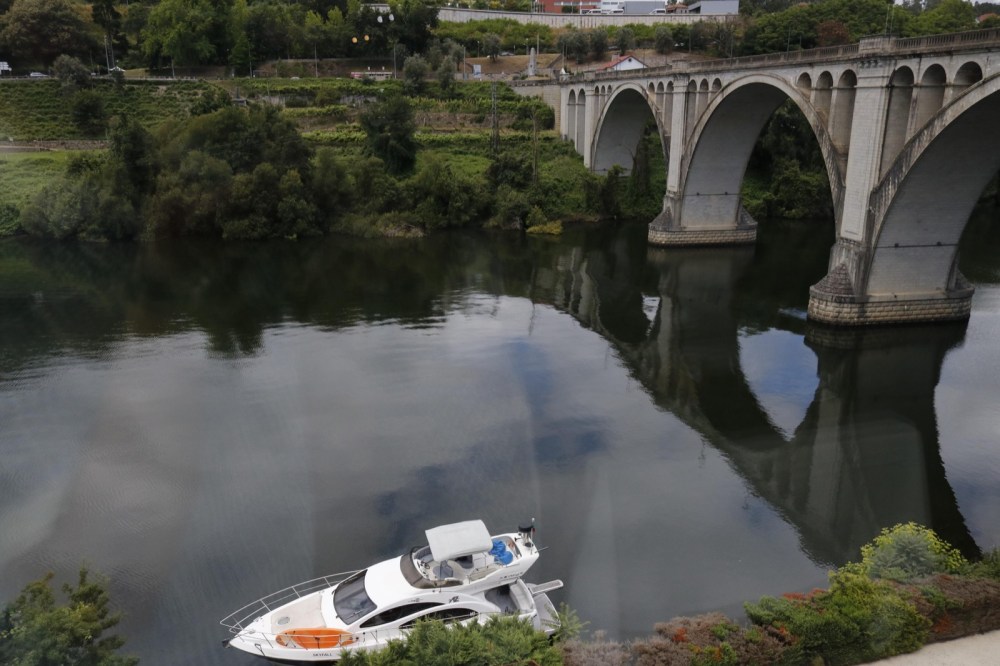
What not to miss along the river
Each stretch of the Douro has its own character. These are the highlights to save for the trip:
- The river bends. The tight curves where the mountain seems to close in over the water, among the most photographed scenes in the region.
- The historic estates. Century-old houses surrounded by vines, many with their name painted on the slopes facing the river.
- The terraces at sunset. When the light drops, every ledge gains relief and shadow, the prime moment for the camera.
- The small quays and riverside villages. Points of life by the water that tell the story of how people lived (and still live) off the river.
The region is divided into three main zones, Baixo Corgo, Cima Corgo and Douro Superior, which grow drier and wilder as you head upriver into the interior. It is worth knowing which stretch you are in: the landscape changes character along the way.
Tips for your Douro visit
- Choose the season with intent. Spring paints the slopes deep green; September brings the grape harvest and its bustle; autumn covers the vines in ochre and red.
- Bet on early or late-day light. That is when the terraces gain texture and the landscape turns most dramatic.
- Bring a hat, water and sunscreen. On the Douro the sun is strong and reflects off the water, even when the river breeze fools you.
- Leave time to stop. A good cruise is not just passing through: it is dropping anchor, tasting a glass of the region’s wine and letting the landscape settle in.
- Keep the camera charged. Between bends, estates and reflections, you will want to stop at every curve.
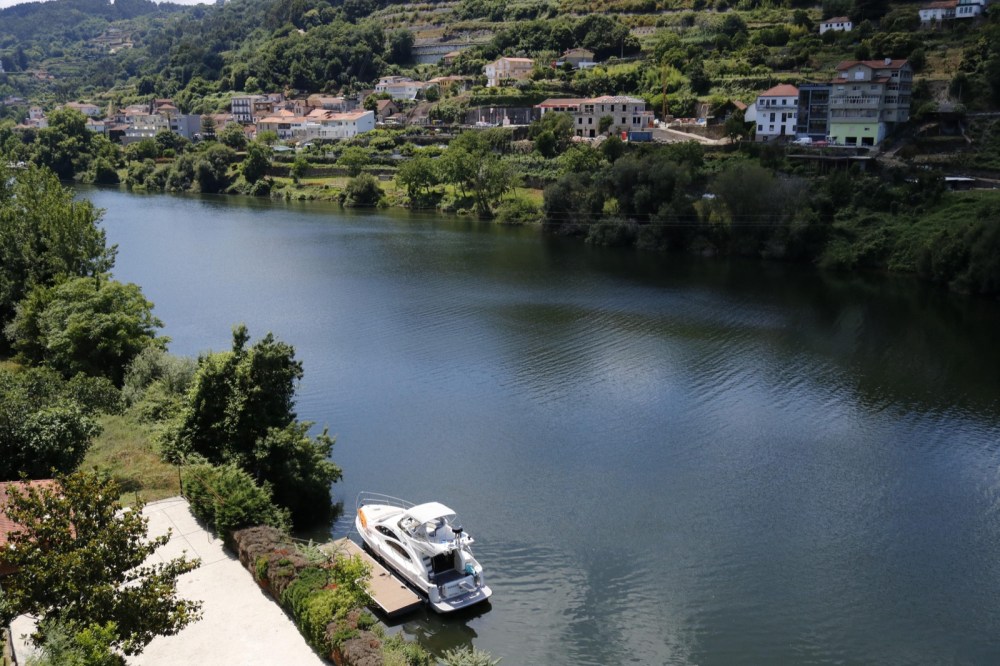
How to discover the Alto Douro with us
At Sailing 360 we take you to the heart of the Alto Douro wine region aboard a private boat, at your own pace and with all the time to soak up the landscape. You choose the route, the length and the extras, from a tasting of the region’s wines to lunch aboard with the vineyards all around you.
Browse our boats and the various Douro experiences to find the one that best suits your trip. As every outing is private and tailor-made, the best next step is to talk to us so we can plan the perfect itinerary.
Frequently Asked Questions
Since when is the Alto Douro wine region a UNESCO World Heritage Site?
Since 2001. It was inscribed on the UNESCO World Heritage list as a living, evolving cultural landscape, for the unique way humans shaped the slopes over the centuries.
Why is the region considered so special?
Because it combines a winemaking tradition of around two thousand years, is one of the oldest demarcated regions in the world (since 1756) and presents a landscape of hand-carved terraces that harmonise people and nature in a unique way.
Is it really worth seeing the Alto Douro by boat?
Yes. The river was the region’s main artery for centuries, and it is from the middle of the water that you grasp the true scale of the slopes and terraces. It is the most authentic and photogenic perspective, with no crowds or winding roads.
What is the best time of year to visit?
It depends on what you are after: spring offers green slopes, September brings the harvest and autumn covers the vines in warm tones. In any season, the light of early morning and late afternoon is the most beautiful.
Do I need to know about wine to enjoy the trip?
Not at all. The landscape, the history and the journey along the river are enough to fill the day. If you wish, you can add a tasting of the region’s wines to make the experience even more complete.
