
Rabelo Boats: the History Behind the Douro's Iconic Vessels
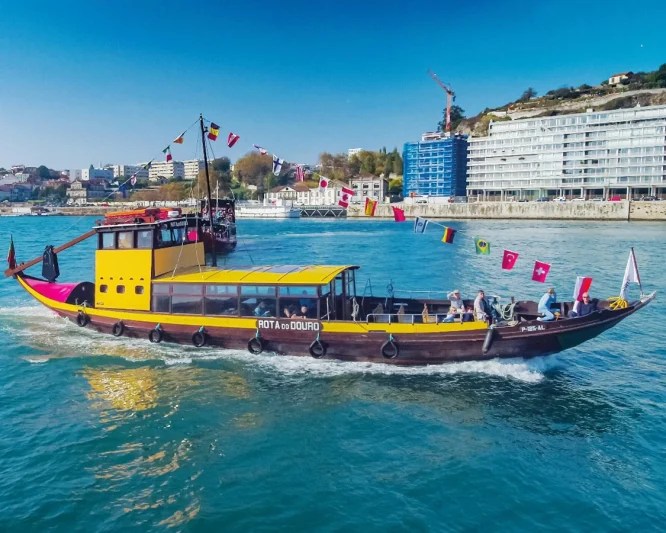
If you have ever strolled along Porto’s Ribeira or the Vila Nova de Gaia waterfront, you have surely seen them: the rabelo boats, flat-bottomed and with a large square sail, lined up in front of the Port wine cellars. Today they are one of the city’s most photographed sights, but they were not always a postcard. For centuries, they were the engine of an entire economy. This is the story behind them.
In short
- Rabelo boats are traditional wooden vessels, built to navigate the Douro River.
- For centuries they carried the barrels of Port wine from the Alto Douro estates down to the Gaia cellars.
- They are recognised by their flat bottom, a large square sail and the espadela, the huge oar used as a rudder.
- Today they no longer carry wine: they are an icon of Porto and star in the annual regatta around the São João festival.
The origin of the rabelo boats
The rabelo boat was born of a very concrete need: to move goods along a difficult river. Before the dams that today tame the Douro, the river was wild, full of rapids, strong currents and shallow stretches. Over generations, the riverside communities refined a vessel able to overcome that setting, sturdy, yet light enough to glide over shallow water.
The name itself helps tell the story. “Rabelo” is thought to come from “rabo” (tail), a reference to the long steering oar that stretched out over the stern and gave the boat direction. Each rabelo was built in wood by local master carpenters, a craft passed from father to son that survives today in very few hands.
What they were for: carrying Port wine
For centuries, the rabelo boat had one clear mission: to bring Port wine downriver. On the estates of the Alto Douro, the wine was placed in wooden barrels and loaded onto the rabelos. From there it followed the current down to the cellars of Vila Nova de Gaia, on the bank facing Porto, where it aged before being exported around the world.
It was a demanding and far from risk-free journey. Descending the Douro loaded with barrels, through rapids and rocks, called for experienced crews and a deep knowledge of the river. With the building of the dams during the twentieth century and the arrival of better roads and railways, transport by rabelo no longer made practical sense. The wine began to travel overland and the rabelos gradually stepped back from their original role.
Features of a rabelo boat
Every detail of the rabelo answered a real problem posed by the river. That is why its silhouette is so unmistakable:
| Feature | What it is | What it was for |
|---|---|---|
| Flat bottom | A wide hull with no pronounced keel | Sailing shallow water without running aground |
| Square sail | A large sail hoisted on a central mast | Using the wind to head upriver |
| Espadela | A huge, long oar at the stern | Steering the boat in the absence of a fixed rudder |
| Apegadas | A raised platform for the pilot | Working the espadela with a better view of the river |
| Barrels (pipas) | Wooden casks arranged on the deck | Carrying the Port wine safely |
The combination of a flat bottom and a square sail is what makes the rabelo so recognisable from afar. And the espadela, worked from the top of the apegadas, was the key piece: without it, controlling the boat through the trickiest stretches would have been almost impossible.
Rabelo boats today: a symbol of Porto
Retired from their original job, the rabelo boats found a second life, this time as a symbol. Moored all along the Gaia bank in front of the cellars, they became a calling card for the region and a floating showcase for the Port wine houses, often with the brand name painted on the sail.
The high point of the year comes around São João, Porto’s great festival: the rabelos of the various wine houses compete in a regatta on the Douro, heading upriver under sail as they once did. It is a spectacle that fills the banks with people and keeps alive the memory of a time when these boats were indispensable. Seeing them today, framed by the Luís I Bridge, is to look straight into the history of the Douro.

Curiosities about the rabelo boats
- The word “pipa” is the traditional barrel in which Port wine travelled — still the unit that gives soul to the image of the loaded rabelo.
- The pilot steered standing up, high on the apegadas, for a better view of the rapids and the banks.
- Many of the rabelos you now see moored in Gaia mainly serve as brand imagery for the Port wine houses.
- The square sail is not just decorative: it is how the crew used the wind to head upriver against the current.
- The São João regatta keeps the tradition alive and is one of the best times of year to see rabelos truly sailing.
See the Douro’s history live on a boat trip
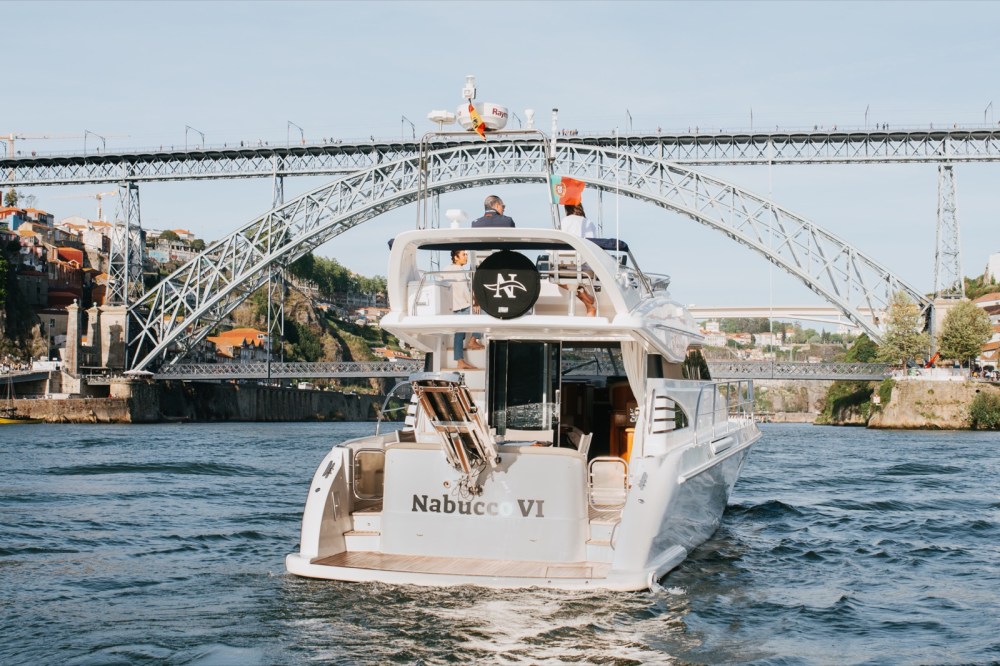
There is no better way to understand the legacy of the rabelo boats than to be on the very river they helped to shape. Aboard, you pass right by the Gaia bank where the rabelos are moored, glide under the Luís I Bridge and see Porto from the same angle that made this city the destination of the wine for centuries.
Discover our boats and choose the boat trip in Porto that best suits your pace from a quiet late afternoon to a longer cruise on the Douro.
Frequently Asked Questions
What is a rabelo boat?
It is a traditional wooden vessel, flat-bottomed and with a large square sail, built to navigate the Douro River and carry goods, above all Port wine.
What were rabelo boats used for?
They were used to carry the barrels of Port wine from the Alto Douro estates down to the cellars of Vila Nova de Gaia, sailing downriver loaded with casks.
Why are they called “rabelo”?
The name is thought to come from “rabo” (tail), a reference to the espadela the long steering oar that stretched over the stern and gave the boat direction.
Do rabelo boats still carry wine?
No longer. With the dams and the arrival of roads and railways, transport by rabelo fell out of use. Today they play a mainly symbolic and tourist role.
Where can I see rabelo boats in Porto?
They are moored along the Vila Nova de Gaia bank, facing Porto. Around São João you can see them sailing in the traditional regatta on the Douro.
